

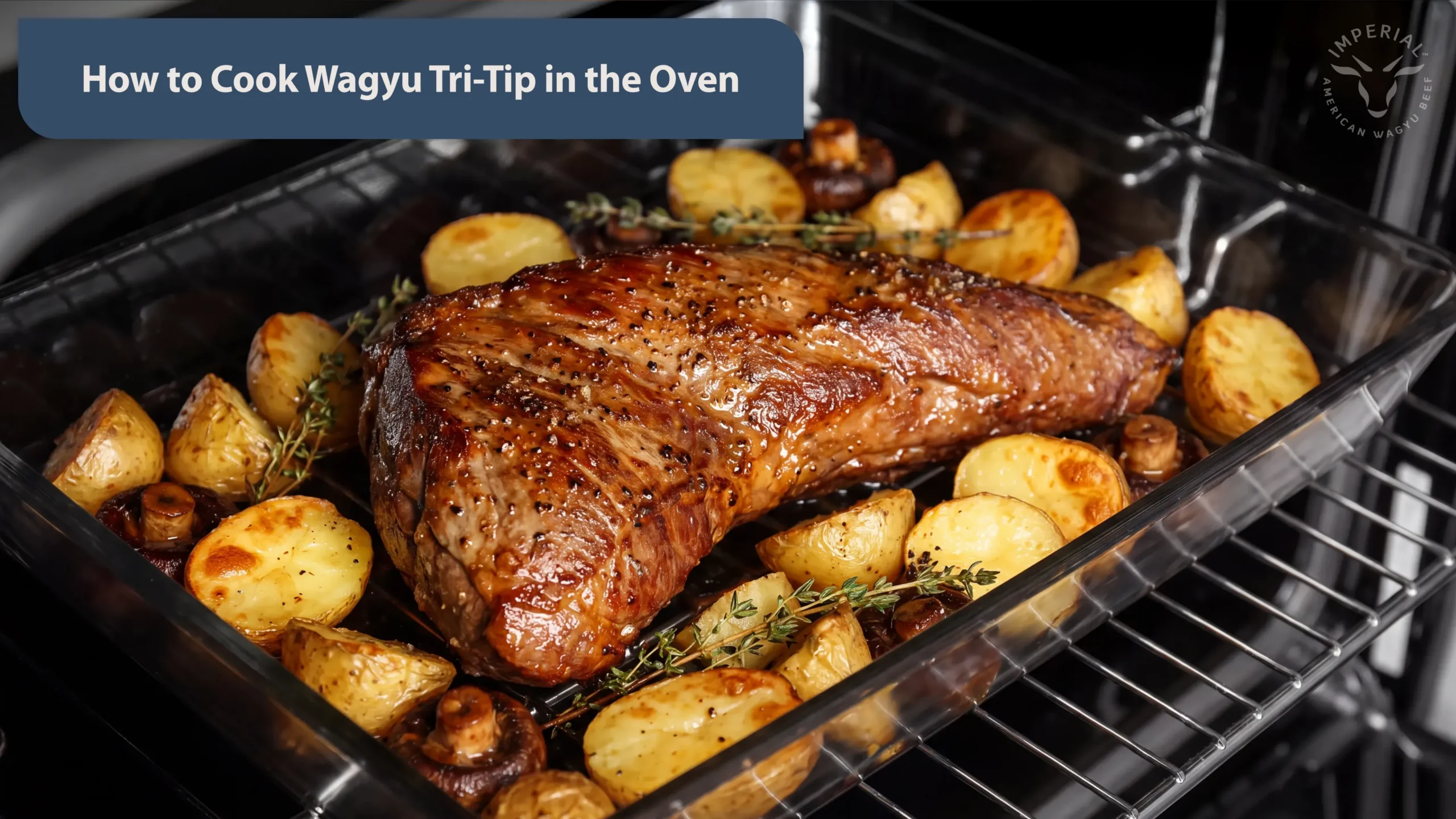
Tri-tip has earned its reputation as a grilling favorite, but when you’re cooking American Wagyu, firing up the grill isn’t your only option. In fact, oven-roasting may be the easiest and most rewarding way to prepare this exceptional cut, as it replicates the even, low-and-slow cooking of a smoker without specialized equipment.
The secret’s that simple: low temperature, a little patience, and letting the quality of the beef do the work. It’s The Way of Wagyu.
However, if grilling and smoking is more your style, see our full Wagyu tri-tip cooking guide to make the most of your meat, however you choose to prepare it.
Why Wagyu Tri-Tip Is Perfect for Oven-Roasting
American Wagyu is well-known for its rich marbling, which delivers incredible flavor and tenderness. That same marbling also means the beef cooks differently than conventional cuts.
Rather than exposing the meat to intense heat from start to finish, a gentle oven roast gives the marbling time to slowly render throughout. The result is a more evenly cooked tri-tip with exceptional juiciness and a tender bite.
How to Season Wagyu Tri-Tip for the Oven
With a cut this flavorful, less is more. Season your Wagyu tri-tip with:
- Kosher salt
- Freshly cracked black pepper
- A light coating of neutral oil
These simple ingredients enhance the beef’s natural richness without masking the flavor that makes American Wagyu unique.
Optimal Wagyu Tri-Tip Oven Temperature & Cook Times
One of the biggest advantages of oven-roasting is control.
Preheat your oven to 275°F and place the tri-tip on a rack inside a sheet pan. Cooking at a lower temperature allows the meat to cook gradually and evenly from edge to center.
As a general guideline, roast for 18-20 minutes per pound. For a 2½-pound Wagyu tri-tip, that typically means about 45 minutes, though an instant-read thermometer is always the best indicator of doneness.
Your Wagyu Tri-Tip Internal Temperature Guide
Every oven cooks a little differently, which is why temperature matters more than the clock. To achieve your desired finish, reference the table below:

Using a meat thermometer takes the guesswork out of cooking and helps ensure consistent results every time.
How Long to Rest Wagyu Tri-Tip After Roasting
Resting isn’t just a suggestion; it’s a critical step.
Because American Wagyu has abundant marbling, letting the roast rest for 5-10 minutes gives the rendered fat and juices time to redistribute throughout the meat. Slice too soon, and much of that moisture ends up on the cutting board instead of in every bite. A little patience pays off with noticeably juicier, more flavorful beef.
Post-Roast, Pre-Slice Pro Tip
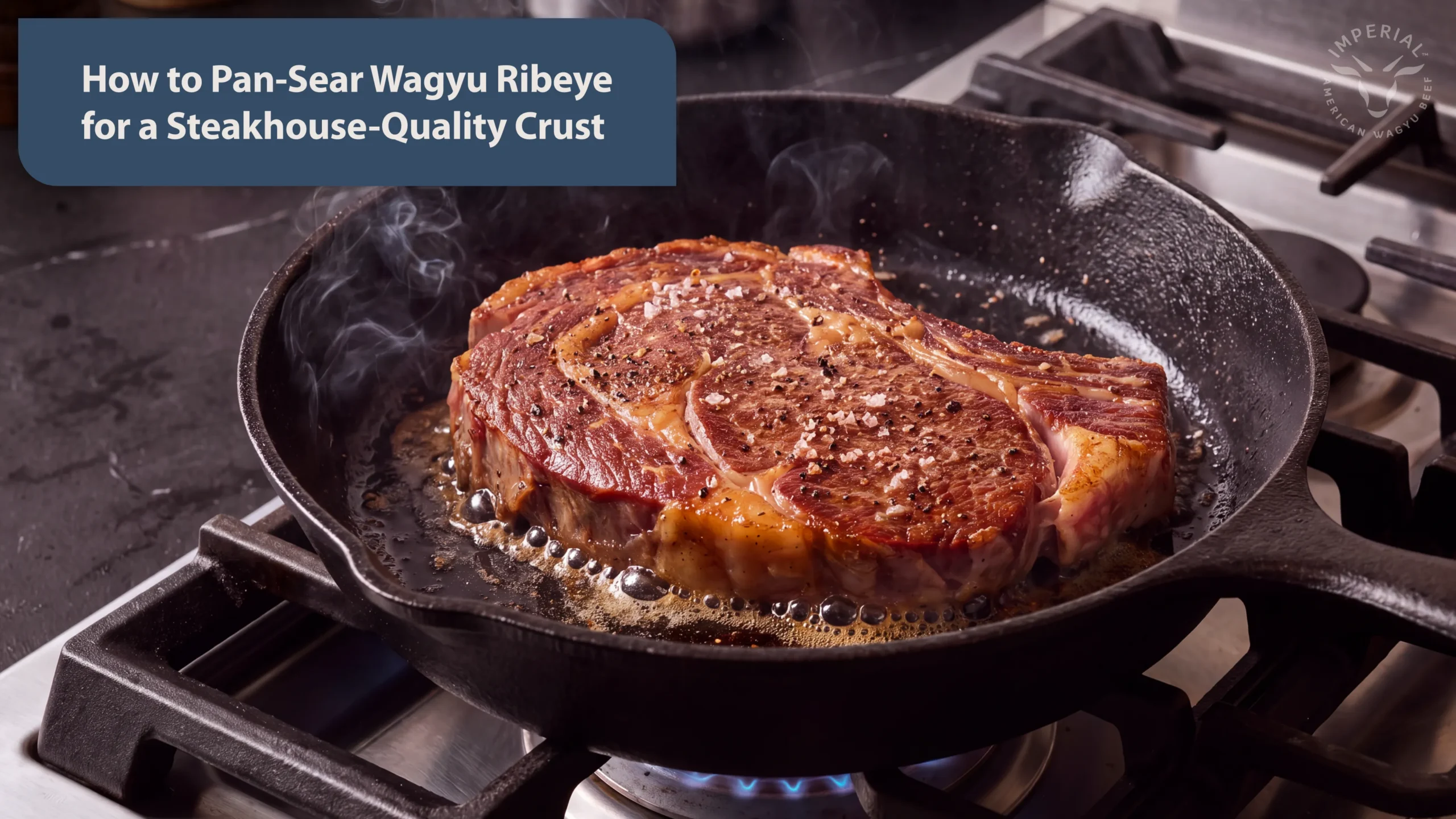
After resting and before slicing, we recommend finishing with a 2-3-minute reverse sear in a hot cast-iron skillet. It’s the ideal way to achieve a caramelized crust without overcooking the roast’s succulent interior.
How to Slice Wagyu Tri-Tip: The Grain Direction Trick
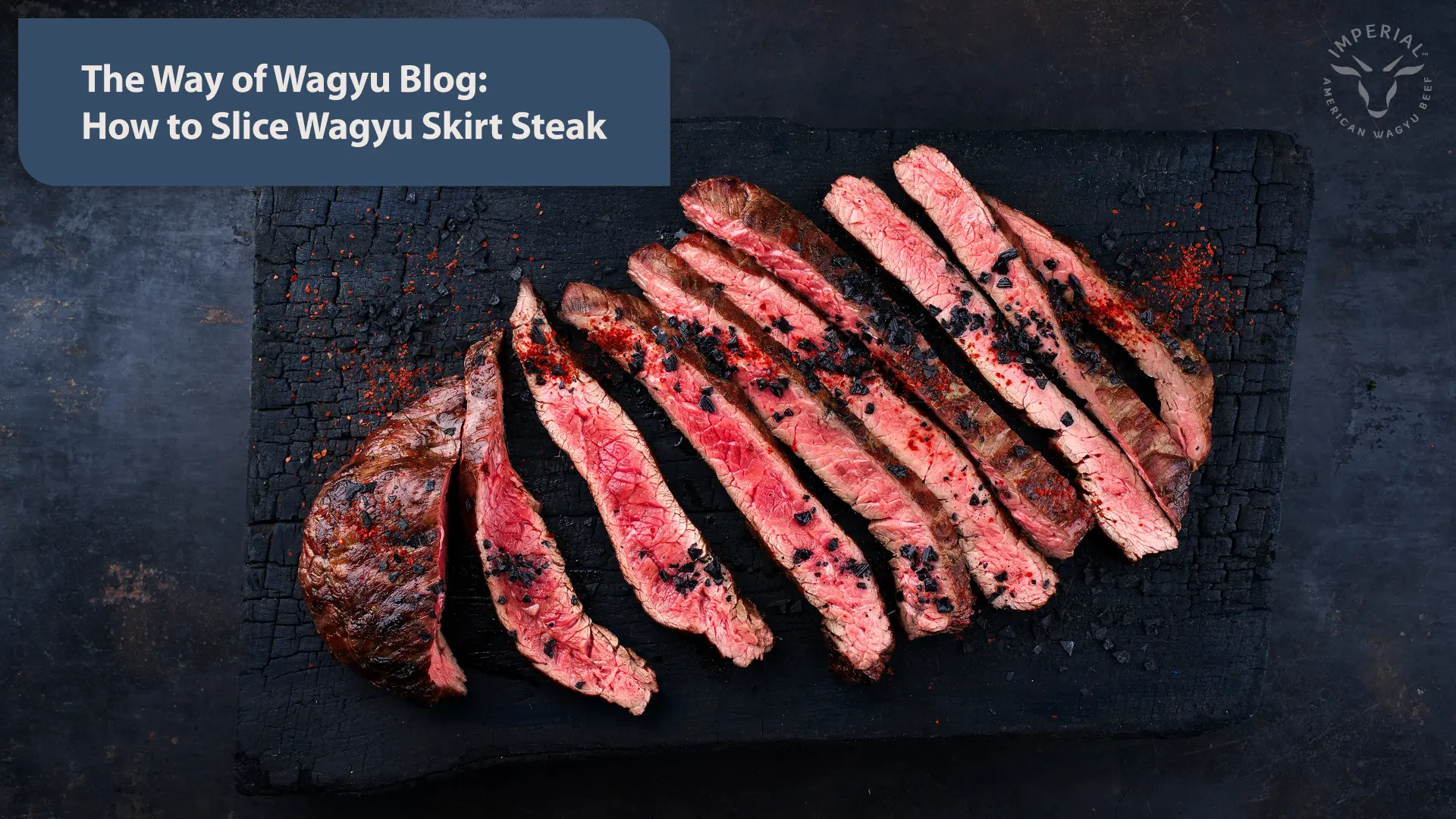
Once rested, slice the tri-tip across the grain before serving. Shortening the muscle fibers creates a more tender dining experience and lets the texture of the American Wagyu truly shine.
Bear in mind that slicing a tri-tip differs from other cuts in that it features fibers running in two different directions. First, you want to sever the roast where the grains intersect – one section will be longer than the other. Then, look out for each section’s grain and proceed to slice perpendicular to it, holding the knife at an angle for maximum tenderness and an attractive presentation.
The Way of Wagyu
Great American Wagyu doesn’t require complicated techniques. It simply benefits from a different approach.
Slow-roasting over a low cooking temperature, then letting the beef rest before slicing it properly, unlocks everything that makes Wagyu tri-tip exceptional: rich marbling, even cooking, and incredible tenderness.
Not difficult. Just different. That’s The Way of Wagyu.